Author: acuervo

  • Terminal commands to keep handy on an unresponsive Ubuntu.

    This is an ever growing list of terminal commands to keep handy

    1. sudo apt-get install --fix-broken
    2. sudo dpkg --configure -a
    3. htop
    4. dpkg --get-selections > installed-software (Back up list of installed Software)
    5. dpkg --set-selections < installed-software (Restore previously installed software)
    6. apt-get -u dselect-upgrade (Execute #5)
    7. lshw > lshw.txt (See your system's hardware info)
  • Apple abandons ZFS on Mac OS X project over licensing issues


    companion photo for Apple abandons ZFS on Mac OS X project over licensing issues

    Sun’s ZFS filesystem, which the company has referred to as “the last word in filesystems,” was widely expected to be adopted by Apple for use in Mac OS X. However, support never materialized, and the open source project to port the filesystem was unceremoniously shut down last Friday. The (un)stated reasons at heart seem to be licensing issues, though there are also technological reasons why Apple may want to create its own advanced filesystem.

    The ZFS filesystem is perhaps one of the first truly “modern” filesystems based on the concept of “copy on write.” In the case of ZFS, this is done at the block level, so when any block on a disk is going to be modified, a fresh copy of all the data for that block is written to a new block on disk, and the older block can be retained for snapshot purposes. The filesystem is meant to address the needs of ever-growing storage, with features like data integrity, integrated device management, instant snapshots, and facilities to deal with increasing concurrency.

    Read the rest of this article...


  • Ubuntu 9.10 brings web sync, faster bootup, GNOME 2.28


    companion photo for Ubuntu 9.10 brings web sync, faster bootup, GNOME 2.28

    The Ubuntu Linux distribution has received a major update today. The new version, Ubuntu 9.10, will introduce several significant new features and will deliver the latest version of the GNOME desktop environment and other applications.

    This is the eleventh release of Ubuntu since the project’s inception five years ago. The distribution has achieved an unprecedented level of popularity in the Linux desktop ecosystem and has attracted a considerable audience. Canonical, the company behind Ubuntu, touts the new release as its best yet and says that the latest improvements will take the Ubuntu user experience to the next level.

    Read the rest of this article...


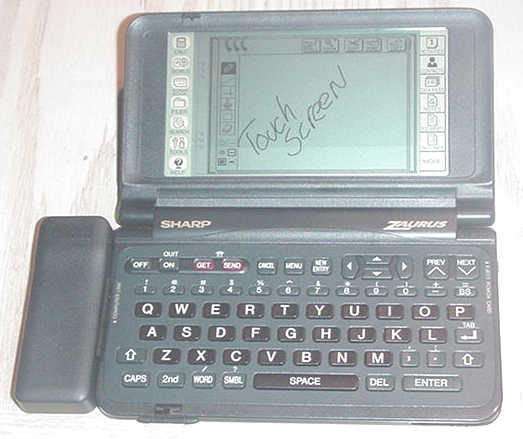
  • Zaurus

    One of my firsts PDAs
    The thing on the side was the dial-up modem.

    I used to connect with it to the VAX at School

    Posted via email

  • Computer workstation assembly

    This weekend I assembled a top-of-the-line workstation for a client.

    Core i7
    8GB RAM
    DP55KG Intel Mother Board
    Nvidia Quadro Graphics Card
    3 x 500GB HDD
    Dual 24" NEC Displays
    Corsair Power Supply
    Silent Thermaltake case.

    Posted via email

  • Windows 8 a 128 bit Operating System?

    That would make Windows a 128 bit wrapper around a 64 bit implementation of a 32 bit extension for a 16 bit patch to an 8 bit operating system, originally coded for a 4 bit microprocessor, written by a 2 bit company, that can’t stand 1 bit of competition.
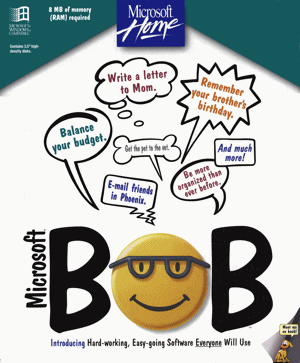
  • The Only Truly Failed Project

    I mentioned this to my younger bother the other day. He was not old enough to remember it. One of Microsoft’s first failures.

    Posted via web

  • Incremental Backup with rdiff-backup

    rdiff-backup tries to “combine the best features of a mirror and an incremental backup”. It’s a command line utility that not only gives you a plain mirror of your files, but also allows you to retrieve previous versions of your files using the extra difference data it keeps. This means you can quickly copy and paste to restore a file from your most recent backup, or retrieve the contents of files as they were at the time of any previous backup. rdiff-backup has built in support for network backups over SSH and is network-efficient and fast thanks to its incremental nature. It’s also possible to run rdiff-backup on Windows, soon I’ll be investigating whether it will work as a backup solution for the Windows systems on my network.

    Tom has a nice rdiff-backup tutorial. Is there a GUI for all this somewhere?

    Posted via web